
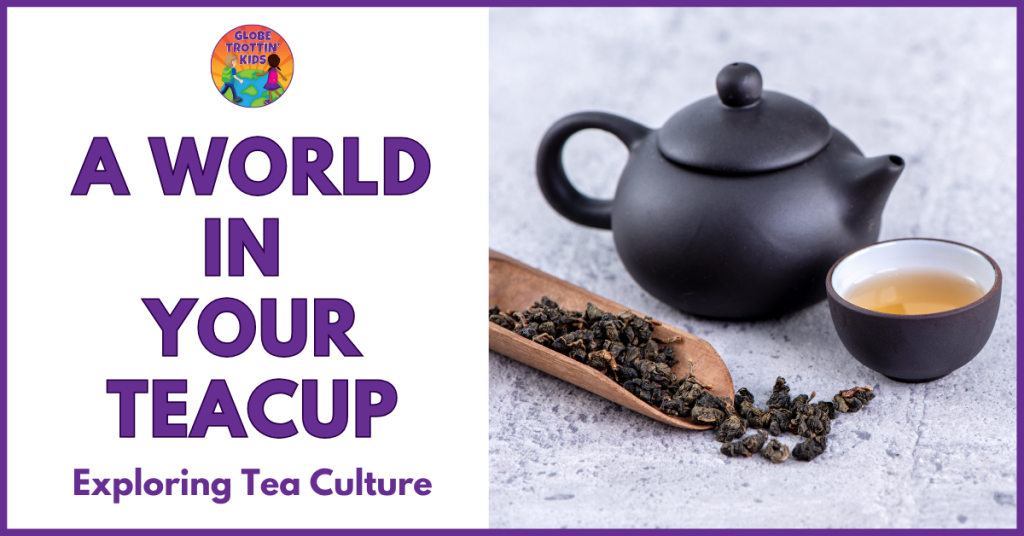
A World in Your Teacup: Exploring Tea Culture
From ancient ceremonies in China to sweet mint tea in Morocco, tea is more than just a beverage – it’s a cultural bridge connecting people across continents. In classrooms, tea can be a window into the world, offering students a sensory and meaningful way to explore geography, traditions, hospitality, and history.
Disclosure: This post contains affiliate links. By clicking through and making a purchase, we receive a small commission at no extra charge to you. All proceeds help support our free global education website. Thank you!
Tea Culture Around the World
1. Chinese Tea Ceremony (Gongfu Cha)
In China, tea is often prepared through a traditional ceremony called Gongfu Cha, which means “making tea with skill.” Small teapots or gaiwan and tiny cups are used, and the tea is brewed multiple times to fully appreciate its flavor. The process emphasizes mindfulness, hospitality, and respect.
2. British Afternoon Tea
Introduced in the 19th century, afternoon tea in Britain is a light meal typically served around 4 p.m. It includes tea along with small sandwiches, scones with clotted cream and jam, and sweet pastries. It’s often seen as a social event, sometimes enjoyed in elegant tea rooms.
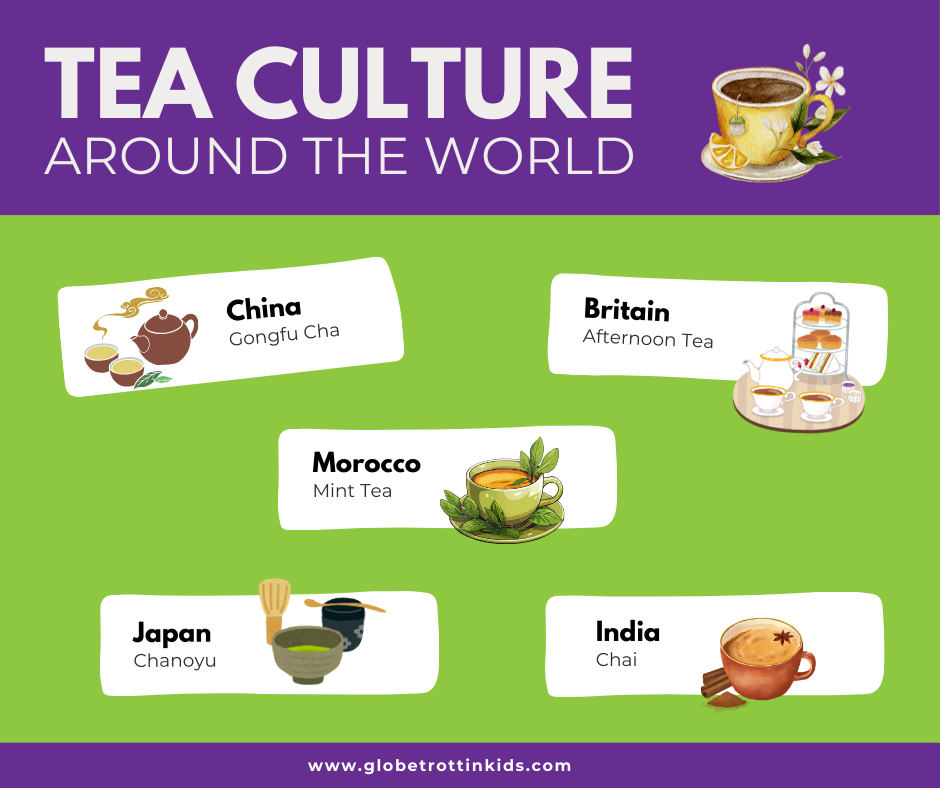
3. Moroccan Mint Tea
In Morocco, serving sweet mint tea (green tea with fresh mint leaves and sugar) is a symbol of hospitality. It is poured from a height into small glasses to create foam on top. The act of pouring and offering tea is a way of honoring guests.
4. Japanese Tea Ceremony (Chanoyu)
The Japanese tea ceremony, also known as Chanoyu or the Way of Tea, is a highly ritualized practice centered on preparing and drinking matcha (powdered green tea). Every movement is deliberate and symbolic, reflecting the values of harmony, respect, purity, and tranquility.
5. Indian Chai Culture
In India, chai (spiced milk tea) is a daily ritual for many. It’s made by brewing black tea with a mixture of spices like cardamom, cinnamon, ginger, and star anise, then adding milk and sugar. Chai is enjoyed at home, offered to guests, and sold by street vendors known as chaiwalas.
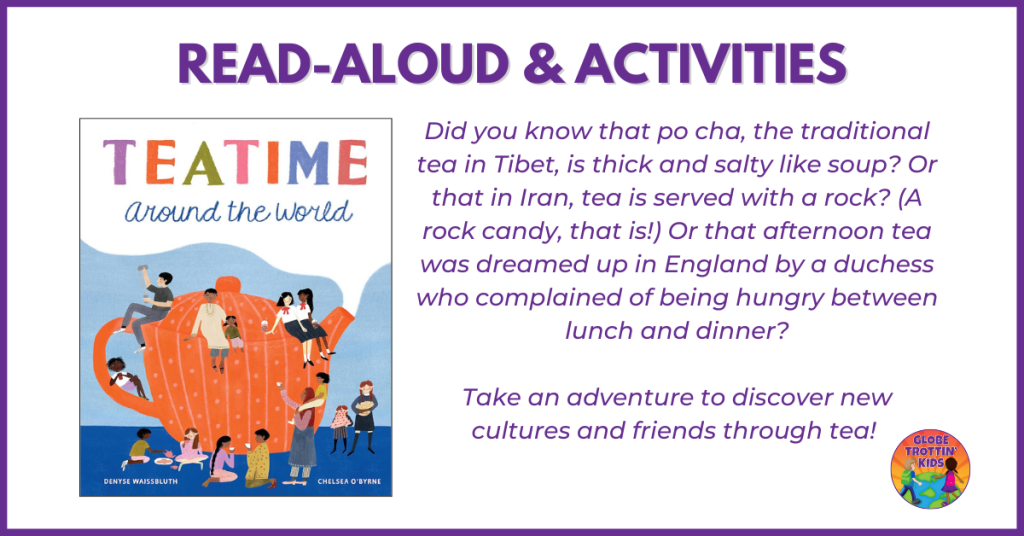
Multicultural Books About Tea
Tea is Love (Coming Soon!) | This picture book celebrates the practice of tea-drinking across various cultures and countries, and meditates on the many meanings the ritual holds. –Amazon
Luli and the Language of Tea | Though they may speak different languages, kids from all over the world come together to enjoy the shared pastime of tea in this delicious book for young readers. –Amazon | Download the Educators Guide from Holiday House.
I love BOBA! | Let’s go and get some boba, a drink Taiwan created! It’s loved by many people and widely celebrated! But do you call it BOBA, pearl milk or bubble tea? Whichever way you name it… It’s DELICIOUS. –Amazon
Tea Ceremony: Explore the unique Japanese tradition of sharing tea | Learn the steps for performing a traditional Japanese tea ceremony. –Amazon

How the Queen Found the Perfect Cup of Tea | Each day when the Queen wakes up, three maids dress her, two more style her hair, and her butler James makes her tea. But when she grows dissatisfied with her brew, the Queen and James set out in search of the perfect cup. With each stop on their hot-air balloon journey, the Queen encounters new friends who expand her horizons―in the kitchen and beyond. –Amazon
Phoebe Dupree is Coming to Tea! | Abby is anxious to host the perfect tea party for a friend she idolizes, but life serves up a sweet taste of the fun to be had when perfection is off the table. –Amazon
Chaiwala! | When their train makes a 10-minute stop at the station in Jaipur, a young girl and her mother hurry to get in line for a cup of chai. While the girl waits for her mug of milky spiced tea, readers are treated to the sights, sounds, and smells of the Chaiwala’s cart. –Amazon
Tea – A Global History | Food historian Helen Saberi explores the rich and fascinating history of tea. Saberi looks at the economic and social uses of tea, such as its use as a currency during the Tang Dynasty and 1913 creation of a tea dance called “Thé Dansant” that combined tea and tango. Saberi also explores where and how tea is grown around the world and how customs and traditions surrounding the beverage have evolved from its legendary origins to its present-day popularity. –Amazon
Tea Activities
1. Global Tea Map
Create a world map display showing where different types of tea come from – China, India, Kenya, Sri Lanka, Japan, the United Kingdom, Morocco, and more. Students can research one country’s tea traditions and present a small poster or report.
Additional teas to explore:
- South Korean Traditional Teas
- Tibetan Butter Tea (Po Cha)
- Russian Samovar Tradition
- Thai Iced Tea (Cha Yen)
- Turkish Çay
- Argentine Yerba Mate
- Pakistani Doodh Patti Chai
- Kenyan Tea
2. Tea Tasting (Caffeine-Free)
Offer a safe “tea tasting” using herbal or fruit teas (make sure to check for allergies first!). Students can describe the different flavors and write sensory poems (“My tea smells like…,” “My tea tastes like…”). This ties beautifully into writing, science, and social studies.
3. Host a “Cultural Tea Party”
After learning about different tea customs (like Japanese tea ceremonies or English afternoon teas), create a mini-classroom celebration. Students could dress up, practice polite greetings, and even sample small treats (like crackers or simple biscuits).
4. Story Time + Tea Time
Pair tea with a quiet read-aloud session. After reading books like I love BOBA! or Chaiwala!, let students enjoy a calm moment sipping a warm herbal tea or lemonade while reflecting on the story.
5. STEAM Connection: Tea Dyeing Art
Use tea bags (black, green, or herbal tea) to dye paper or fabric and create beautiful artworks. This simple chemistry experiment shows how natural materials can be used for art while connecting back to tea’s plant origins.
Online Resources
Read a brief introduction to tea from Britannica Kids.
Read descriptions of tea-growing regions from TeaHaus.
Discover 17 facts about tea, its history, and its cultivation from The Collector.
International Tea Day, May 21
International Tea Day highlights the rich history, cultural significance, and global importance of tea. It’s a wonderful opportunity to introduce students to different world cultures, geography, history, and even basic economics through a topic that is accessible and engaging.
By exploring tea culture with students, we’re not only teaching about a beloved drink but opening the door to a deeper understanding of global traditions, values, and ways of life.
Whether through a classroom tea tasting, an art activity, or a thoughtful story time, these experiences help students appreciate diversity while finding common ground in the everyday. This International Tea Day—or anytime during the year—raise a (tiny) cup to learning that brings the world into your classroom.