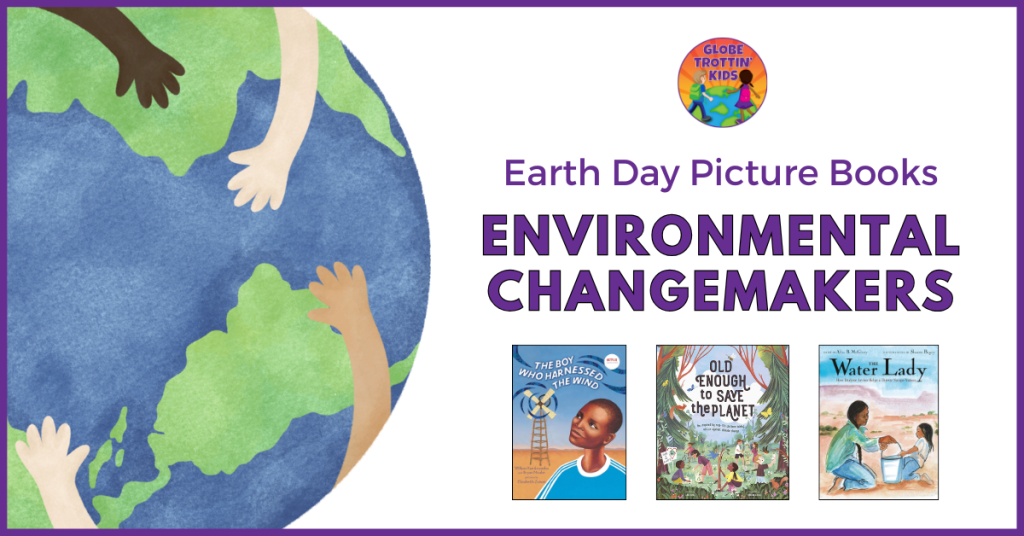
Earth Day Picture Books: Environmental Changemakers
Earth Day is a great opportunity to help children consider how people care for the planet. Recycling, planting seeds, cleaning up litter, or learning ways to reduce waste are all meaningful starting points for making a positive impact. However, Earth Day can also serve as an opportunity for students to look globally and discover how people are making a positive impact in communities worldwide.
Through nonfiction picture books, students can learn about people who have planted trees, protected water, restored habitats, reduced pollution, and found creative solutions to environmental challenges. These books also open the door to important conversations about community, responsibility, and collaboration.
Deepen those conversations by sorting environmental changemaker stories into three categories: helping your own community, helping another community, and working in partnership across communities. This classification strategy provides students with a framework for thinking about how change happens while building global awareness and critical thinking.
Connecting Earth Day to Global Learning
Environmental challenges may be global, but many solutions begin at the community level. When students read about real people taking action, they begin to see that caring for the Earth is not just a big abstract idea. It is something people do in neighborhoods, villages, cities, forests, farms, and schools every day.
This type of lesson supports more than science. It also builds global awareness, empathy, connections to geography, reading comprehension, speaking and listening skills, and thoughtful discussion.
Most importantly, it helps students begin to see themselves as people who can make a positive difference, too.
A Simple Classification Strategy for Environmental Picture Books
As you read nonfiction picture books for Earth Day, encourage students to think about the role each person played.
1. Helping Your Own Community
These are stories about people improving the environment where they live.
2. Helping Another Community
These are stories about people supporting environmental work in a place beyond their own community.
3. Working in Partnership Across Communities
These are stories about people from different places working together, combining ideas, knowledge, and action.
Some books may fit more than one category, and that is actually part of the learning. When students discuss where a book belongs and explain their thinking, they are practicing important comprehension and reasoning skills.
Picture Books to Explore
Helping Your Own Community
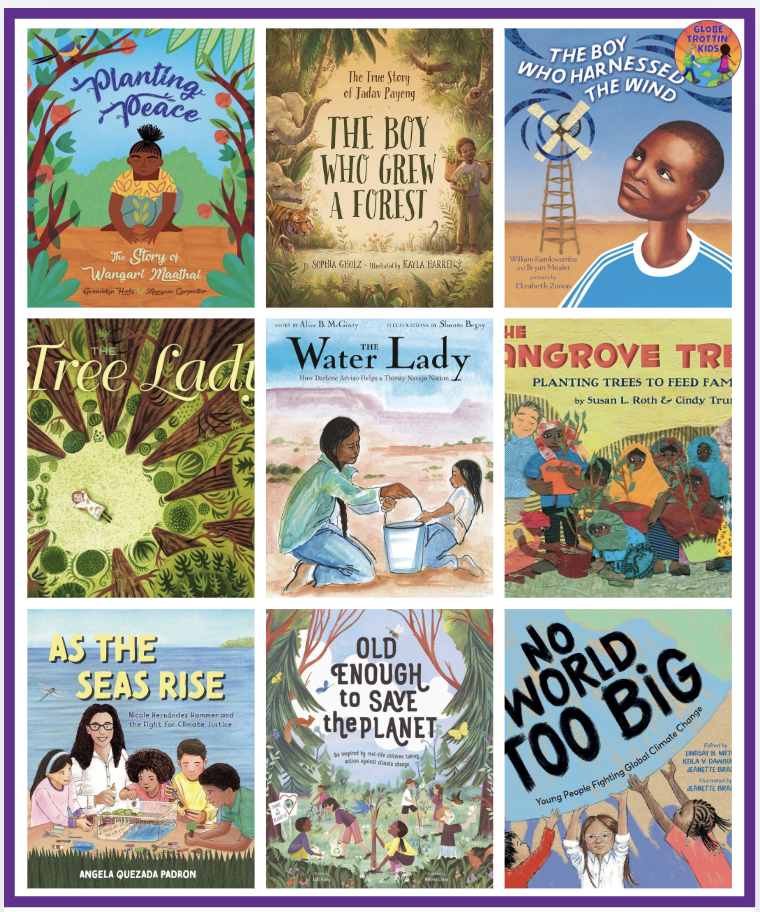
Planting Peace: The Story of Wangari Maathai by Gwendolyn Hooks
Country: Kenya
This picture book tells the story of Wangari Maathai, who founded the Green Belt Movement and helped restore land in Kenya by encouraging communities to plant trees. Her work shows how local action can grow into lasting change.
The Boy Who Grew a Forest: The True Story of Jadav Payeng by Sophia Gholz
Country: India
Jadav Payeng began planting trees in a barren area and, over time, helped grow a forest. His story is a powerful example of persistence and caring for the natural world close to home.
The Boy Who Harnessed the Wind: Picture Book Edition by William Kamkwamba and Bryan Mealer
Country: Malawi
This inspiring true story follows William Kamkwamba, who used scrap materials and creative thinking to build a windmill that helped his village. It is also a wonderful example of a child making an environmental contribution in his own community.
The Tree Lady: The True Story of How One Tree-Loving Woman Changed a City Forever by H. Joseph Hopkins
Country: United States
This biography tells the story of Kate Sessions, whose love of trees helped transform San Diego. It is a strong example of how one person can make a lasting environmental difference in the place where they live.
The Water Lady: How Darlene Arviso Helps a Thirsty Navajo Nation by Alice B. McGinty
Place: Navajo Nation
This picture book introduces Darlene Arviso and her work bringing water to families across the Navajo Nation. It opens the door to important conversations about water access, community care, and environmental justice.
Helping Another Community
The Mangrove Tree: Planting Trees to Feed Families by Susan L. Roth and Cindy Trumbore
Country Featured: Eritrea
This true story shares how Dr. Gordon Sato worked with villagers in Eritrea to plant mangrove trees. The trees helped restore the environment and support local families.
As the Seas Rise: Nicole Hernández Hammer and the Fight for Climate Justice by Angela Quezada Padron
Country/Community Context: United States and climate-vulnerable communities
This picture book biography introduces climate scientist Nicole Hernández Hammer and her work supporting communities affected by climate change. It is a strong title for helping students think about environmental action that extends beyond one’s own neighborhood and connects to broader issues of justice.
Working in Partnership Across Communities
The Mangrove Tree: Planting Trees to Feed Families by Susan L. Roth and Cindy Trumbore
This title also fits especially well here because the story is not simply about one person bringing a solution. It shows people working together, with local participation and shared effort, to improve the environment.
As the Seas Rise: Nicole Hernández Hammer and the Fight for Climate Justice by Angela Quezada Padron
This title works well in this category because it highlights the importance of listening to and working alongside communities facing environmental challenges.
Old Enough to Save the Planet by Loll Kirby
Countries: Multiple
This nonfiction picture book introduces young environmental activists from around the world. Each child takes action in their own community, but together their stories show how people across communities can contribute to a larger global effort.
No World Too Big: Young People Fighting Global Climate Change by Lindsay H. Metcalf, Keila V. Dawson, and Jeanette Bradley
Countries: Multiple
This inspiring title features young people from different parts of the world who are taking action on climate issues in their communities. It is an excellent choice for showing students how local action and global connection can go hand in hand.
A Helpful Teacher Tip About Framing
As you talk about these books, it can be helpful to guide students away from oversimplified ideas like one person coming in and fixing everything.
Instead, encourage questions such as:
- Who was already part of this community?
- Who understood the problem best?
- Who worked together to create change?
- What made this effort successful?
This helps students see environmental action through a lens of partnership, respect, and shared responsibility.
Environmental Changemakers Sorting Activity
Write these three headings on chart paper, the board, or a pocket chart:
- Helping Your Own Community
- Helping Another Community
- Working in Partnership Across Communities
After reading each book aloud, invite students to decide where it belongs. Then ask them to explain their thinking using evidence from the story.
You might ask:
- What environmental problem did this person try to solve?
- Who benefited from their work?
- Did the person work alone or with others?
- Was this their own community, another community, or a partnership?
- Could the book fit in more than one category? Why?
Earth Day Extension Ideas
Once students understand the categories, extend the lesson with one of these activities:
🌎 Create a class anchor chart.
List ways people around the world help the Earth and sort them by category.
🌎 Connect to geography.
Locate each country on a map or globe and talk about the region, climate, and environmental challenges people may face there.
🌎 Compare local and global action.
Ask students to think about environmental needs in their own school or neighborhood. What could they do in their own community?
🌎 Respond through writing.
Have students answer a prompt such as:
Which environmental changemaker inspired you most, and why?
or
What is one way kids can help care for the Earth where they live?
🌎 Plan a class Earth Day action.
Use the books as inspiration for a simple community project such as a school garden, litter cleanup, recycling campaign, or water-saving poster project.