Hanukkah for Kids: Traditions, Books & Activities
What do glowing candles, spinning dreidels, and delicious potato pancakes have in common?
They’re all part of Hanukkah, the Jewish Festival of Lights!
Celebrated by Jewish families and communities around the world, Hanukkah is an eight-day holiday that honors an important moment in Jewish history. From lighting a special candleholder to enjoying traditional foods, the celebration is filled with meaningful customs.
For elementary educators, Hanukkah offers an opportunity to introduce students to Jewish history and culture while building connections through geography, literacy, math, and hands-on learning.
Let’s explore the story behind Hanukkah, discover how it’s celebrated, and find engaging ways to bring this holiday into the classroom!

Disclosure: This post contains affiliate links. If you make a purchase through these links, Globe Trottin’ Kids may receive a small commission at no additional cost to you. Your support helps keep our global education website free. Thank you!
What Is Hanukkah?
Hanukkah (also spelled Chanukah) is a Jewish holiday that celebrates religious freedom and the rededication of the Second Temple in Jerusalem more than 2,000 years ago.
The word Hanukkah means “dedication” in Hebrew.
The Story Behind the Festival of Lights
More than 2,000 years ago, a group of Jewish fighters called the Maccabees fought for their religious freedom and reclaimed the Second Temple in Jerusalem. According to Jewish tradition, when they rededicated the Temple, a small amount of oil that should have lasted only one day miraculously burned for eight days. Today, Hanukkah celebrates this important event and honors religious freedom, perseverance, and Jewish traditions.
When Is Hanukkah Celebrated?
Hanukkah begins on the 25th day of Kislev in the Hebrew calendar and lasts for eight nights.
Because the Hebrew calendar differs from the calendar most schools use, Hanukkah’s dates change each year, usually falling in November or December.
Hanukkah 2026: December 4 at sunset through December 12 after nightfall.
How Is Hanukkah Celebrated?
Jewish families celebrate Hanukkah in different ways, but several familiar traditions are shared across many communities.
1. Lighting the Hanukkiah
One of the most recognizable Hanukkah traditions is lighting a special candleholder called a hanukkiah, commonly known as a Hanukkah menorah.
A hanukkiah has nine branches:
- Eight hold candles representing the eight nights of Hanukkah.
- The ninth holds the shamash, or helper candle, which is used to light the others.

On the first night, one candle is lit in addition to the shamash. Another candle is added each evening until all eight are glowing on the final night.
Many families place their hanukkiah near a window so others can see the lights.
Did You Know?
A traditional Temple menorah has seven branches, while the hanukkiah used during Hanukkah has nine. The two are related but serve different purposes.
Classroom Connection: Display a picture of a hanukkiah and challenge students to identify its parts. Younger students can explore counting patterns, while older students can calculate how many candles are lit during all eight nights.
2. Playing Dreidel
A dreidel is a four-sided spinning top used in a traditional Hanukkah game.
Each side features a Hebrew letter. In many Jewish communities, the letters are:
- Nun (נ): Do nothing.
- Gimel (ג): Take everything in the pot.
- Hey (ה): Take half the pot.
- Shin (ש): Add one token to the pot.
The letters are traditionally associated with a Hebrew phrase meaning “A great miracle happened there,” referring to the Hanukkah story.
In Israel, dreidels commonly feature a different fourth letter, pey, changing the phrase to “A great miracle happened here.”
How to Play Dreidel
- Give each player an equal number of small tokens, such as counters or beans.
- Everyone places one token in the center.
- Players take turns spinning the dreidel and following the directions associated with the letter that lands face up.
- If the pot is empty, each player contributes another token.
- Continue playing for an agreed-upon number of rounds or until one player has collected all the tokens.
Classroom Connection: Dreidel is a fun way to practice turn-taking, counting, addition, subtraction, and fractions.
Older students can also investigate probability. Since a dreidel has four sides, what might students predict about the outcomes of repeated spins?
FREE Printable: Make Your Own Dreidel!
Let students explore the shape and Hebrew letters of a dreidel with this printable template.
Color, cut, fold, and assemble a paper dreidel, then use it to play the traditional game!
Download the FREE Dreidel Printable
Teaching Tip: Reinforce the paper template with lightweight cardboard before assembling it for a sturdier spinning top.
3. Enjoying Traditional Hanukkah Foods
Food is another important part of many Hanukkah celebrations.
Because oil plays a significant role in the traditional Hanukkah story, fried foods are especially popular.
Two familiar examples are:
Latkes: Crispy potato pancakes, often served with applesauce or sour cream. These are especially associated with Ashkenazi Jewish traditions.
Sufganiyot: Sweet, fried doughnuts commonly filled with jelly and enjoyed during Hanukkah, particularly in Israel.

Other Jewish communities enjoy different treats, including sfenj, Moroccan-style fried doughnuts, and bimuelos, fried pastries found in Sephardic Jewish traditions.
Classroom Connection: Locate the places associated with these foods on a world map. Ask students to compare ingredients, cooking methods, and family food traditions.
4. Family Gatherings, Music & Giving
Hanukkah is also a time for family gatherings, songs, games, and celebrations.
Some families exchange small gifts, while others give gelt, traditionally money and sometimes chocolate coins wrapped in gold foil.
Gift-giving practices vary among Jewish families and communities.
For many, gathering to light the hanukkiah, sharing traditional foods, and remembering the holiday’s history are central to the celebration.
Hanukkah Classroom Activities
These activities connect cultural learning with familiar elementary skills and can be adapted for different grade levels.
1. Dreidel Math Challenge
Skills: Counting, fractions, probability, and data collection
After introducing the dreidel game, have students predict which letter will appear most often.
Working in small groups, students spin a dreidel 20 times and record the results in a tally chart.
Then challenge them to:
- Create a bar graph.
- Identify the most and least frequent outcomes.
- Compare their predictions with their actual results.
- Discuss whether results might change with more spins.
Extend It: Combine the class results to create a larger data set and explore experimental probability.
2. Compare Hanukkah Traditions Around the World
Skills: Geography, research, and cultural comparisons
Display a world map and introduce students to Jewish communities in different countries.
Invite students to research examples of Hanukkah foods, songs, or customs from two locations.
Create a simple comparison chart: Location | Holiday Food or Custom | Something I Learned
Ask students to identify traditions that are widely shared and details that reflect particular communities.
3. Eight Nights of Light: A Math Investigation
Skills: Number patterns, repeated addition, and mathematical reasoning
Students investigate how the number of Hanukkah candles increases each night.
Begin with one holiday candle on the first night, two on the second, and so on.
Ask students to predict how many holiday candles are needed for all eight nights.
The total is:
1 + 2 + 3 + 4 + 5 + 6 + 7 + 8 = 36
If one new shamash candle is also used each night, the total becomes 44 candles.
Extend It: Have students organize the information into a table, discover patterns, or explain how they calculated the total.
4. Read, Compare & Explore Hanukkah Stories
Skills: Reading comprehension, vocabulary, and text-to-text connections
Read a Hanukkah picture book and invite students to identify the traditions, foods, and symbols they discover.
Try these discussion questions:
- What did you learn about Hanukkah from the story?
- Which details helped you understand the family’s traditions?
- How did the illustrations add to your understanding?
- What questions would you like to investigate further?
For older students, compare a nonfiction introduction to Hanukkah with a fictional holiday story. Which information is factual, and which details are part of the author’s imagination?
Children’s Books About Hanukkah
Picture books are one of the best ways to introduce students to the holiday through engaging stories and authentic cultural experiences.
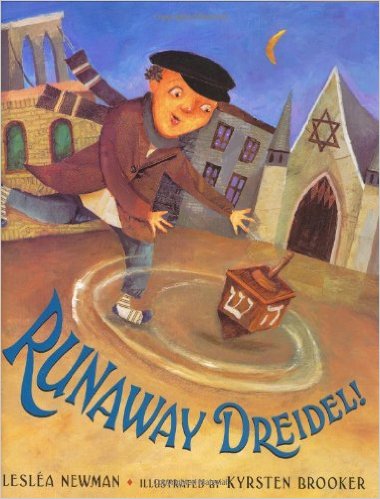
A little boy’s new dreidel spins out of control, sending his entire family on a hilarious holiday chase! This rhythmic story introduces Hanukkah foods, traditions, and vocabulary.
Extend the Learning: Explore rhyming patterns, create a map of the dreidel’s journey, or write an imaginative new ending.
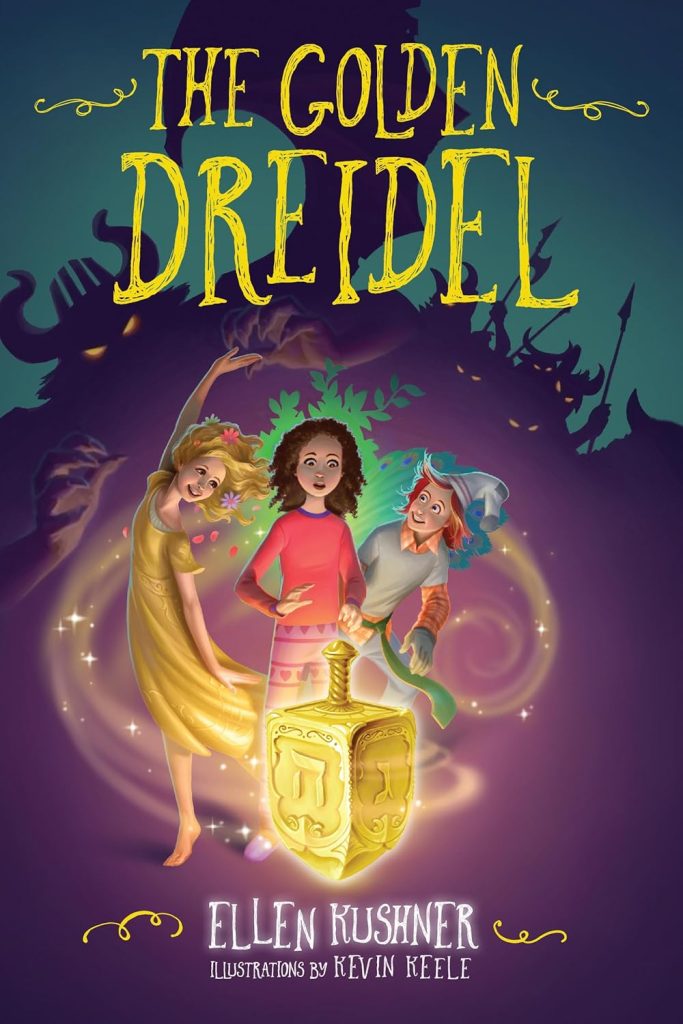
When Sara receives a mysterious golden dreidel, she is transported into a magical adventure inspired by Jewish folklore.
This longer story is especially suitable for older elementary readers who enjoy fantasy, riddles, and imaginative adventures.
Extend the Learning: Explore character development, Jewish folklore, and creative writing.
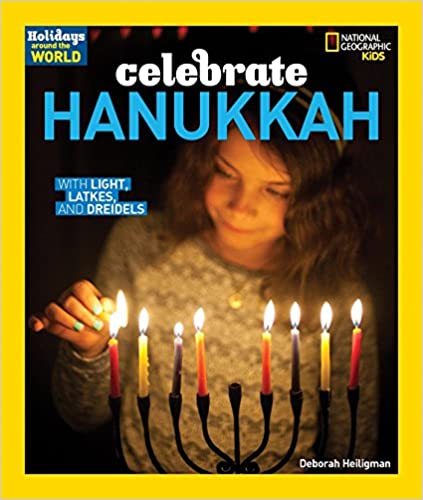
Celebrate Hanukkah: With Light, Latkes, and Dreidels
This National Geographic Kids nonfiction book uses colorful photographs to introduce the history, traditions, and worldwide celebrations of Hanukkah.
Readers discover Jewish communities in countries including Israel, India, Ghana, Uganda, Peru, Poland, and the United States.
Extend the Learning: Use photographs to make observations and investigate similarities and differences among Jewish communities around the world.
More Hanukkah Learning Resources
Continue exploring the holiday with these helpful resources:
PJ Library: Hanukkah With Kids
Find family-friendly activities, book recommendations, recipes, and explanations of holiday traditions.
My Jewish Learning: Hanukkah Traditions Around the World
Learn about regional customs that reflect the diversity of Jewish communities.
My Jewish Learning: How to Play Dreidel
A helpful guide explaining the rules and traditions of this popular Hanukkah game.
Bringing Cultural Understanding Into the Classroom
Learning about Hanukkah gives students an opportunity to appreciate a holiday that holds deep historical and religious meaning for Jewish communities.
Through books, maps, games, and thoughtful discussions, children can explore the traditions of others while recognizing the importance of respecting different beliefs and family experiences.
Whether or not students celebrate Hanukkah themselves, understanding its history and customs helps them develop a richer appreciation of the diverse world we share.
Happy Hanukkah! Chag Hanukkah Sameach! 🕎