
Learn About Mohandas Gandhi
Mohandas Karamchand Gandhi, widely known as the Mahatma (“Great Soul”), was born on October 2, 1869, in Porbandar, India.
Gandhi became an important leader in India’s movement for independence from British rule. He is especially known for promoting nonviolent resistance and civil disobedience – peaceful ways of challenging unfair laws and working for change. His methods influenced later movements and leaders around the world.
October 2, Gandhi’s birthday, is a national holiday in India and is recognized by the United Nations as the International Day of Non-Violence. The day provides an opportunity to explore ideas of peace, fairness, conflict resolution, and the ways people can work toward change without violence.
Introduce students to Gandhi’s life and legacy through a short video, picture books, free curriculum guides, and meaningful classroom activities.
Teaching Tip: For younger students, focus on age-appropriate themes such as peaceful problem-solving, fairness, courage, and making positive change. Older elementary students can begin exploring concepts such as British colonial rule in India, peaceful protest, civil disobedience, and the Salt March.
Disclosure: This post contains affiliate links. By clicking through and making a purchase, we receive a small commission at no extra charge to you. All proceeds help support our free global education website. Thank you!
Watch & Listen
A Mahatma Called Gandhi
Begin with this approximately 12-minute talking book biography that introduces several important events from Gandhi’s life.
After watching, invite students to discuss:
- What problems did Gandhi want to change?
- What did he believe about using violence?
- What does it mean to protest peacefully?
- How can one person’s actions encourage other people to create change?
Read and Respond
Be the Change: A Grandfather Gandhi Story by Arun Gandhi and Bethany Hegedus
In this story, Gandhi’s grandson Arun learns an important lesson about waste and responsibility. His grandfather helps him understand that even small actions can affect other people – and that positive change begins with the choices we make ourselves.
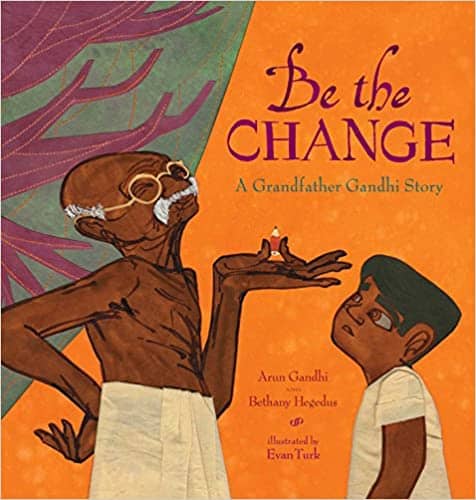
The free Common Core Curriculum Guide includes discussion questions, vocabulary activities, nonfiction text features, point of view, character analysis, connections between text and illustrations, and writing activities.
Students can also complete the authors’ Be the Change Pledge after reading and discussing the story.
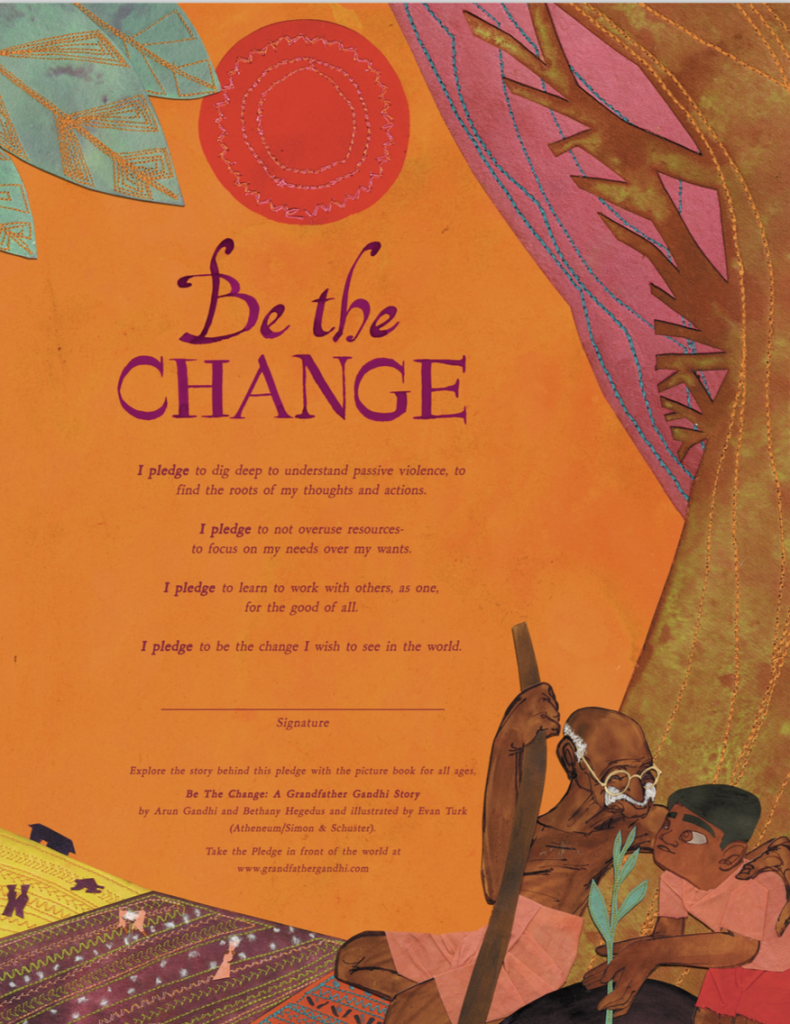
Classroom Connection: What Does It Mean to “Be the Change?”
After reading, ask students to identify one small action they could take to make their classroom, school, community, or world a little better. Ideas might include:
- reducing waste
- including someone who feels left out
- helping a classmate
- taking care of classroom materials
- conserving water
- showing kindness
- solving a disagreement peacefully
Students can write or illustrate their idea and create a classroom Be the Change display.
Grandfather Gandhi by Arun Gandhi and Bethany Hegedus
In Grandfather Gandhi, Arun shares memories of living with his famous grandfather. When Arun struggles with anger, Gandhi teaches him that anger itself is not necessarily bad – it is what we choose to do with that anger that matters.
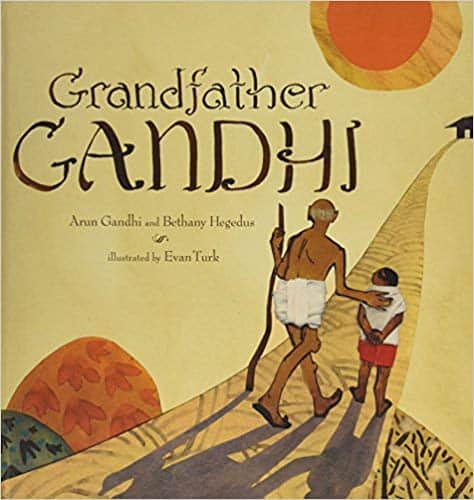
The free Common Core Curriculum Guide provides background information, discussion questions, and activities such as:
- creating a decision tree
- participating in a character talk show
- using context clues to understand unfamiliar vocabulary
- examining nonfiction text features
- identifying the authors’ point of view
- writing opinion, informative, and narrative pieces
A Grandfather Gandhi Readers Theatre script provides six speaking roles plus a chorus, making it a useful option for small-group or whole-class reading.
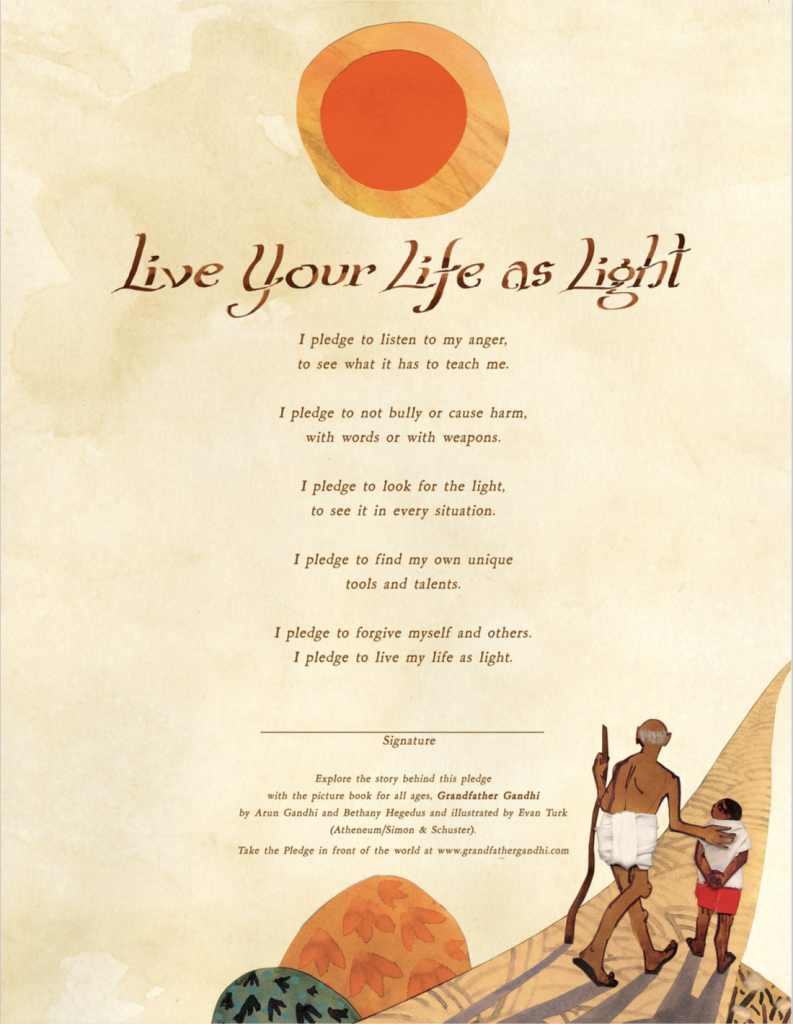
Students can also complete the authors’ Live Your Life as Light Pledge after reading and discussing the book.
Classroom Connection: Turning Anger Into Action
Ask students to brainstorm constructive ways to respond when they feel angry or believe something is unfair.
Create two columns: Feeling or Problem | Positive Action
For example:
Someone is left out → Invite them to join.
Two classmates disagree → Listen, talk, and look for a solution.
Something seems unfair → Explain the problem respectfully and suggest a change.
This helps students connect Gandhi’s ideas about nonviolence with situations they may experience in their own lives.
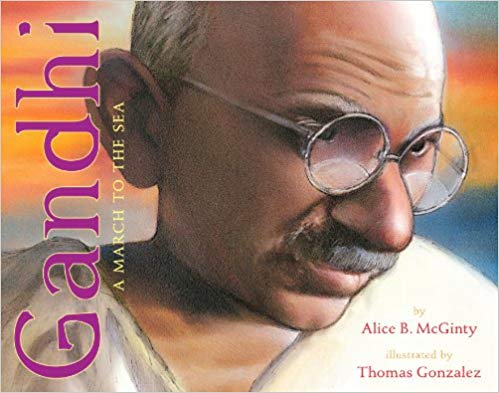
Gandhi: A March to the Sea by Alice B. McGinty
Introduce older elementary students to one of Gandhi’s best-known acts of civil disobedience: the Salt March of 1930.
Under British colonial rule, the government controlled salt production and sales in India and collected taxes on it. Gandhi and his followers marched to the Arabian Sea, where he deliberately broke the British salt laws by making salt. The protest became an important symbol of nonviolent resistance to British rule.
A free Common Core Curriculum Guide includes:
- pre-reading questions and historical background
- a map activity
- a writing lesson comparing historical figures
- a free-verse poetry lesson
- a science investigation about salt
- a weaving activity
- a Salt March reenactment
Geography Connection
Use a map to locate:
India → Gujarat → Ahmedabad → Dandi → Arabian Sea
Students can investigate the route of the Salt March and consider:
Why might walking together over a long distance make a peaceful protest more powerful or visible?
Extend the Learning: Explore India
Connect your study of Gandhi with geography by exploring India’s location, landmarks, culture, languages, and traditions. Visit our India Country Profile page.
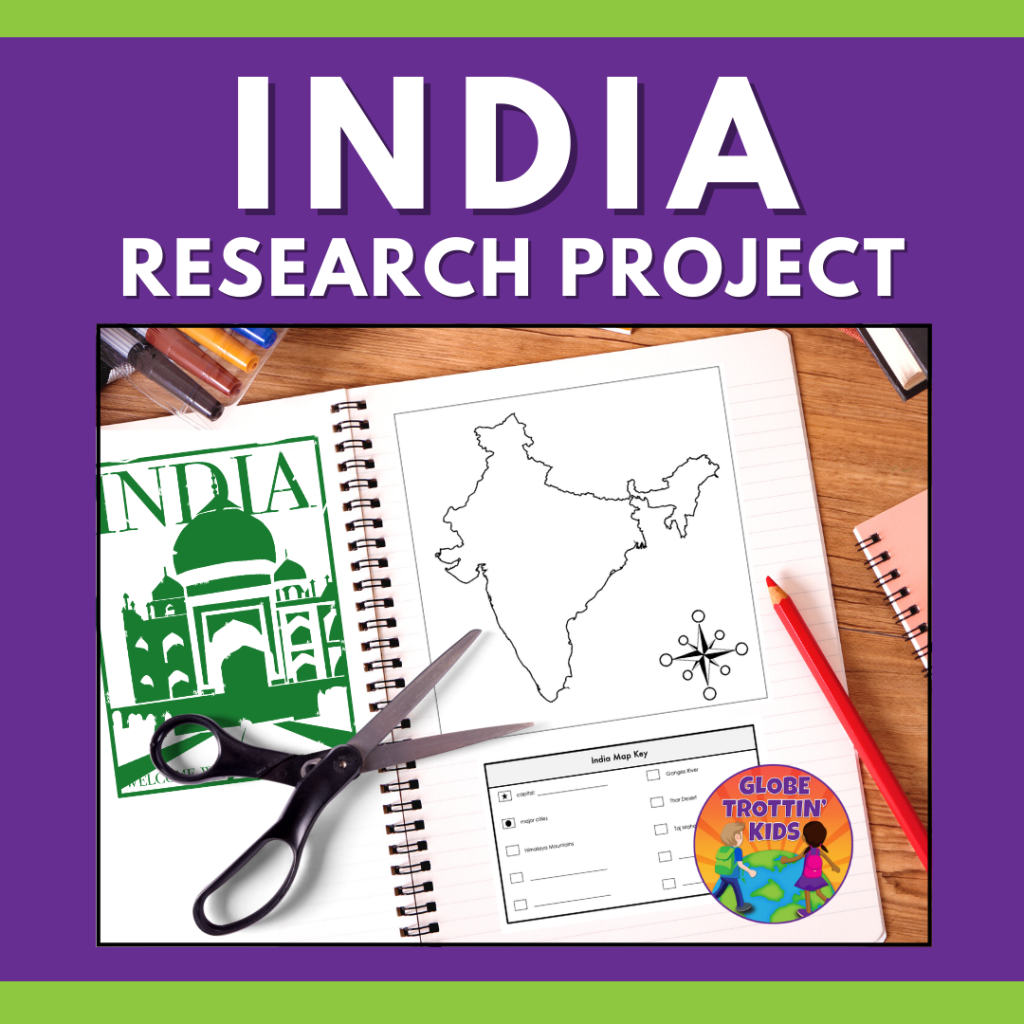
Use our interactive India Country Research Project to help students build a broader understanding of the country.
A Bigger Question for Global Citizens
Gandhi’s life provides an opportunity for students to think about a question that reaches far beyond one person or one moment in history:
How can people work to change something they believe is unfair without using violence?
Students can look for examples in history, literature, their communities, and their own lives.
Learning about peaceful action, listening to different perspectives, and finding constructive ways to solve problems can help young learners develop the skills they need to participate thoughtfully in their communities and in our interconnected world.