
World Food Day for Kids: Facts & Activities
World Food Day is observed every year on October 16. Created by the Food and Agriculture Organization of the United Nations (FAO), the day raises awareness about hunger, nutrition, food security, and the importance of creating sustainable food systems that provide everyone with access to safe and nutritious food.
World Food Day is recognized around the globe, with events and activities taking place in approximately 150 countries.
World Food Day 2026: Innovate Today. Nourish Tomorrow.
The 2026 World Food Day theme is “Innovate today. Nourish tomorrow.”
The theme encourages people to think about how new ideas, technology, traditional knowledge, and cooperation can help build a future where everyone has access to sufficient, diverse, safe, and nutritious food – while also protecting our planet.
World Food Day is also an opportunity for students to explore an important global question:
How can we help create a world where everyone has enough nutritious food to eat?
Children may not be able to solve world hunger on their own, but they can learn how their everyday choices connect to larger global issues. Simple actions such as wasting less food, trying a variety of nutritious foods, appreciating the people who grow and produce our food, and taking care of natural resources can all contribute to a more sustainable food future.
World Food Day Key Facts
Use these facts to introduce students to some of the challenges – and opportunities – connected to food and hunger around the world.
- About 645 million people experienced hunger in 2025, or approximately 7.8% of the world’s population. Although global hunger has declined for three consecutive years, progress has not been equal in every region.
- Approximately 2.1 billion people experienced moderate or severe food insecurity in 2025. This means they sometimes had to reduce the amount or quality of the food they ate because they lacked reliable access to food.
- Hunger and food insecurity affect communities differently around the world. Rural communities are especially vulnerable, and agriculture provides livelihoods for many of the world’s poorest people.
- At the same time that millions of people experience hunger, enormous amounts of food are wasted. The United Nations Environment Programme estimates that households around the world waste the equivalent of more than 1 billion meals every day.
- Food security isn’t only about having enough food. People also need access to safe, nutritious, diverse, and affordable foods that support healthy lives.
- Farmers, fishers, herders, food producers, scientists, governments, businesses, communities, and individuals all have roles to play in creating more sustainable and resilient food systems.
Resource: Food and Agriculture Organization of the United Nations (FAO), World Food Day
What Can Kids Do?
Help students understand that small actions can make a difference when many people participate.
Encourage kids to:
- Waste less food. Take only what you think you will eat and find creative ways to use leftovers.
- Learn where food comes from. Explore how foods are grown, harvested, transported, and prepared around the world.
- Try a variety of foods. Discover fruits, vegetables, grains, and dishes from different cultures.
- Respect food producers. Learn about the farmers, fishers, growers, and other workers who help bring food to our tables.
- Protect natural resources. Food production depends on healthy soil, clean water, biodiversity, and a healthy planet.
- Share what you learn. Teach family members and friends about food waste, hunger, sustainability, and the importance of nutritious food for everyone.
Bring World Food Day Into the Classroom
World Food Day provides a meaningful opportunity to connect geography, culture, science, math, literacy, and global citizenship.
Students might investigate where their favorite foods come from, compare meals from different parts of the world, track classroom food waste, explore how climate and geography affect agriculture, or brainstorm ways their school or family could reduce food waste.
Most importantly, help students recognize that food connects all of us. Learning about where our food comes from—and understanding that access to nutritious food is not equal around the world—can help children become more thoughtful consumers and caring global citizens.
5 World Food Day Classroom Activities
- Map Your Meal
Choose a familiar meal or snack and investigate where its ingredients come from. Students can locate each place on a world map and discuss how food connects people and places. - Food Waste Challenge
Track how much food is thrown away during lunch for one day or one week. Brainstorm simple ways the class can reduce waste, such as taking smaller portions or saving unopened items when appropriate. - Meals Around the World
Explore photos or descriptions of meals from different countries. Have students compare ingredients, staple foods, preparation methods, and similarities between cultures. - From Farm to Table
Choose one food item and trace its journey from where it is grown or produced to the grocery store or cafeteria. Students can create a simple diagram showing the people and steps involved along the way. - Design a Better Food Future
Invite students to imagine an invention, school program, or community idea that could help reduce food waste, support farmers, conserve resources, or make nutritious food more accessible. Students can draw their idea and write a short explanation of how it would help.
Activity Book
The World Food Day Children’s Activity Book, “Innovate today. Nourish tomorrow.”, is an educational tool for educators and parents to help young learners explore innovation in agrifood systems and global challenges through stories and real FAO projects.
It encourages youth to become Food Heroes by discovering solutions – from science, data and technology, to knowledge and learning from nature – and understanding how their actions can shape a better food future. Through different activities, it also invites children and youth to take part in the World Food Day Poster Contest 2026, share their ideas, and inspire change.

FAO. 2026. Activity book: Innovate today, nourish tomorrow. Rome. https://doi.org/10.4060/ce0290en
Download the FREE Activity Book
Poster Contest
Children and teens worldwide, from age 5 to 19, are encouraged to join the World Food Day Poster Contest and show their creativity.
Create a poster that shows what “Innovate today. Nourish tomorrow.” means to you. Show us how innovation – big or small, old or new – can help feed the world, protect the planet, and build a better future for everyone.
The deadline for entries is 6 November 2026.
CLICK HERE for more information and to upload your poster!
Use the World Food Day Activity Book (above) for inspiration.
Stone Soup: A Story for World Food Day
This version of the classic tale was written for World Food Day in 2008 and focuses on the message that when we each give a little, we can achieve a lot.
Click here to download.
Play Free Rice. For each answer you get right, 10 grains of rice are donated through the World Food Programme to help end hunger.
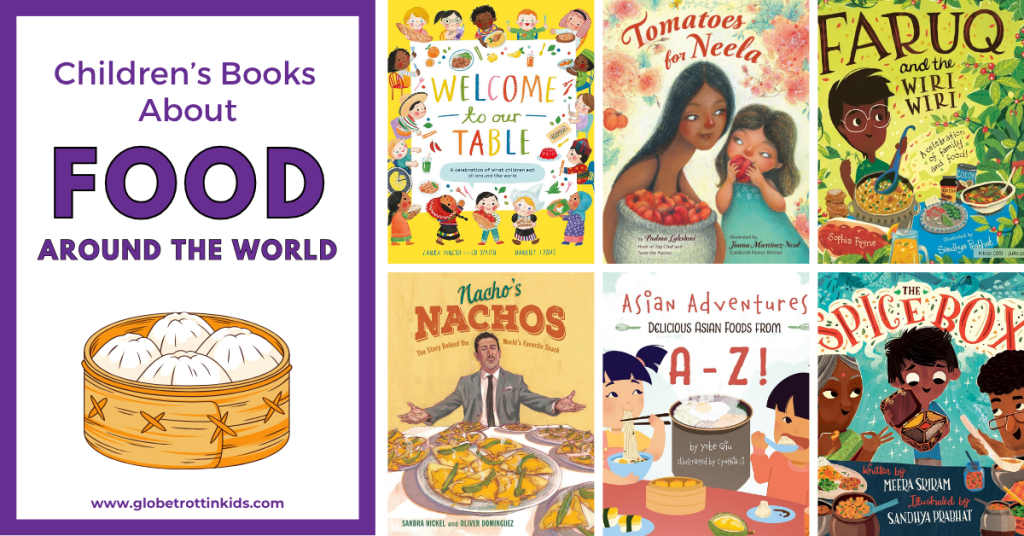
Browse our growing collection of picture books about Food Around the World.
Browse our Pinterest Boards for more resources & inspiration.
Related Posts: