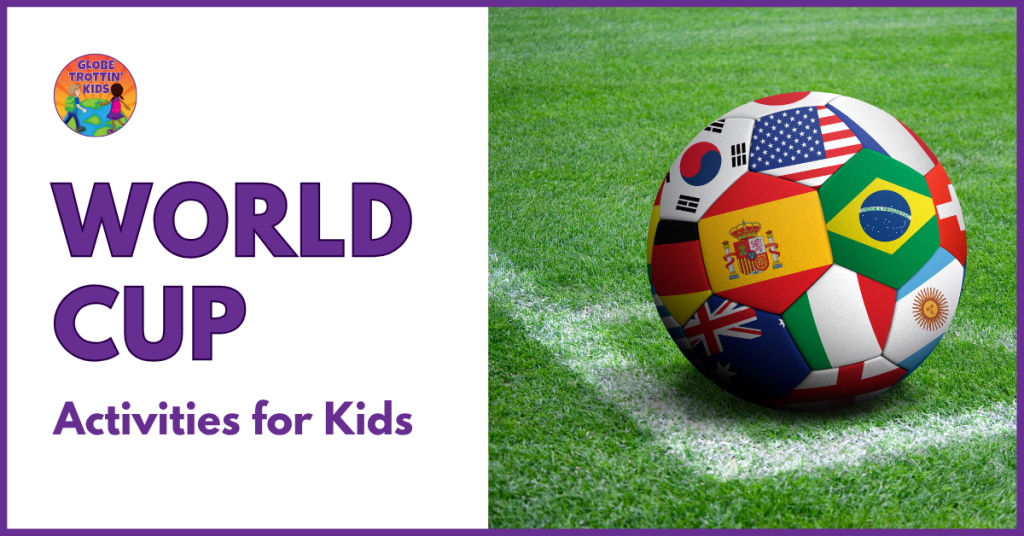
World Cup Activities for Kids
The World Cup is more than a soccer tournament – it’s a global celebration that brings countries, cultures, and communities together. For kids, it’s a fun and meaningful way to explore geography, learn about different nations, practice teamwork, and see how one sport can connect people around the world.
Whether you’re celebrating at home, in the classroom, or at summer camp, these World Cup activities, books, and games are designed to help children learn while they cheer. From mapping participating countries and reading football-themed books to playing active games and creating global sportsmanship pledges, this collection makes it easy to turn World Cup excitement into a rich global learning experience.
Disclosure: This post contains affiliate links. By clicking through and making a purchase, we receive a small commission at no extra charge to you. All proceeds help support our free global education website. Thank you!
Did You Know?
- Soccer is called football in most countries because players mainly use their feet to move the ball.
- Soccer is considered the most popular sport in the world, with fans and players on every continent.
- The FIFA World Cup is held every four years and brings together national teams from around the world.
- The first men’s FIFA World Cup was held in Uruguay in 1930.
- The first FIFA Women’s World Cup was held in China in 1991.
- A soccer field is also called a pitch.
- A standard soccer team has 11 players on the field, including the goalkeeper.
- Goalkeepers are the only players who can usually use their hands, but only inside their team’s penalty area.
- Many soccer balls have a pattern of black pentagons and white hexagons, a design that became famous during the 1970 World Cup.
- Fans around the world cheer in many different ways, including songs, chants, instruments, flags, and face paint.
World Cup Activities
Use our World Flag Printables to help kids celebrate the World Cup with a festive opening and closing ceremony.
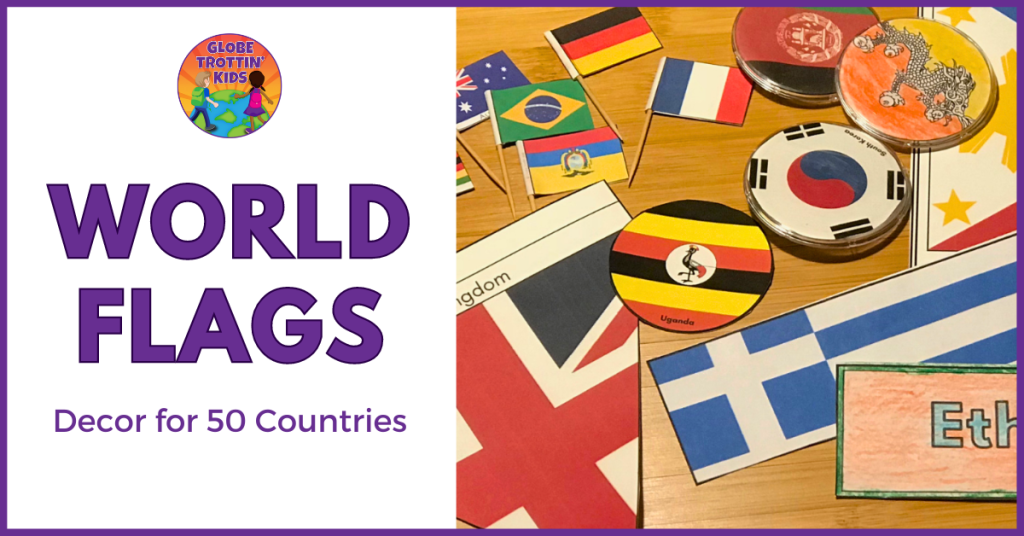
Note: Check the product description to see the list of 50 countries.
Opening Ceremony: Assign each child, pair, or small group a participating World Cup country (or let them choose). Have them color or decorate that country’s flag, locate the country on a world map, and learn one quick fact to share. Then host a “Parade of Nations” where students walk in with their flags, announce their country, and share a greeting, capital city, landmark, or fun soccer fact.
Closing Ceremony: Bring the flags back out for a final celebration. Kids can share something they learned about their country, reflect on a favorite World Cup moment, or recognize examples of teamwork, sportsmanship, and global connection. Display the flags together as a “World Cup Wall of Nations” to show how the tournament brings countries and cultures together.
- Design a Team Flag or Jersey: Kids create a flag, scarf, or jersey inspired by their chosen country’s colors, symbols, animals, landmarks, or cultural patterns.
- World Cup Map Challenge: Use a world map to locate each team’s country. Add labels, color by continent, or mark the travel distance from your location to the host country.
- Soccer Around the World Research Cards: Students create mini fact cards about soccer in different countries, including famous players, popular teams, stadiums, chants, or traditions.
- World Cup Math Bracket: Create a kid-friendly tournament bracket. Track wins, losses, points, goals scored, goal differences, and simple statistics throughout the tournament.
- International Snack Stadium: Invite kids to research or sample snacks from different World Cup countries, such as pão de queijo from Brazil, samosas from India, tacos from Mexico, or croissants from France.
- Soccer Words in Many Languages: Learn how to say words like goal, team, ball, friend, and thank you in the languages spoken by different teams. Make a multilingual soccer word wall.
- Create a World Cup Mascot: Kids design a mascot for their chosen country or for the whole tournament. They should explain what animal, object, colors, or symbols they chose and why.
- Global Sportsmanship Pledge: Discuss how soccer connects people around the world. Kids write or illustrate a pledge about teamwork, respect, fair play, and celebrating different cultures.
Soccer Books
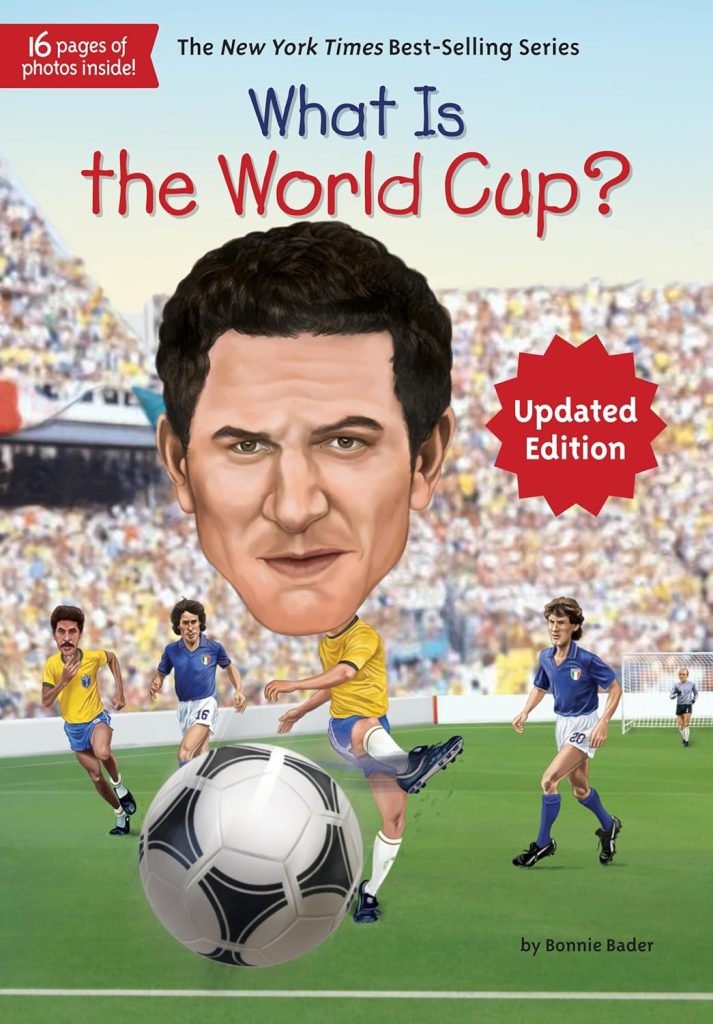
Every four years, thirty-two of the best men’s soccer teams from across the globe compete for the title of FIFA World Cup winner. Over one billion people tuned in worldwide to watch the final game of the 2014 competition, making the World Cup the most widely viewed sporting event in the world, exceeding even the Summer Olympics! This book takes a look back at what has changed since the first tournament in 1930 and what lies ahead for the most popular sport in the world. -Amazon
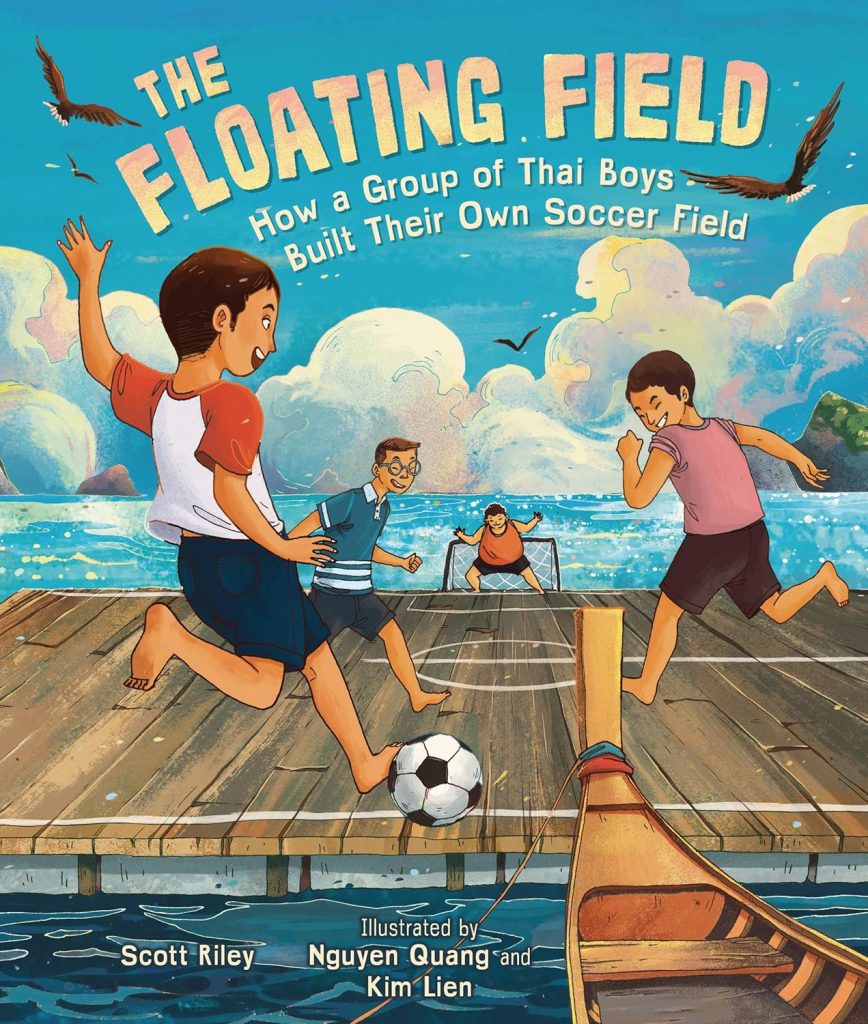
On the island of Koh Panyee, in a village built on stilts, there is no open space. How will a group of Thai boys play soccer?
After watching the World Cup on television, a group of Thai boys is inspired to form their own team. But on the island of Koh Panyee, in a village built on stilts, there is no open space. The boys can play only twice a month on a sandbar when the tide is low enough. Everything changes when the teens join together to build their very own floating soccer field. -Amazon
Watch this short film about this inspiring true story:
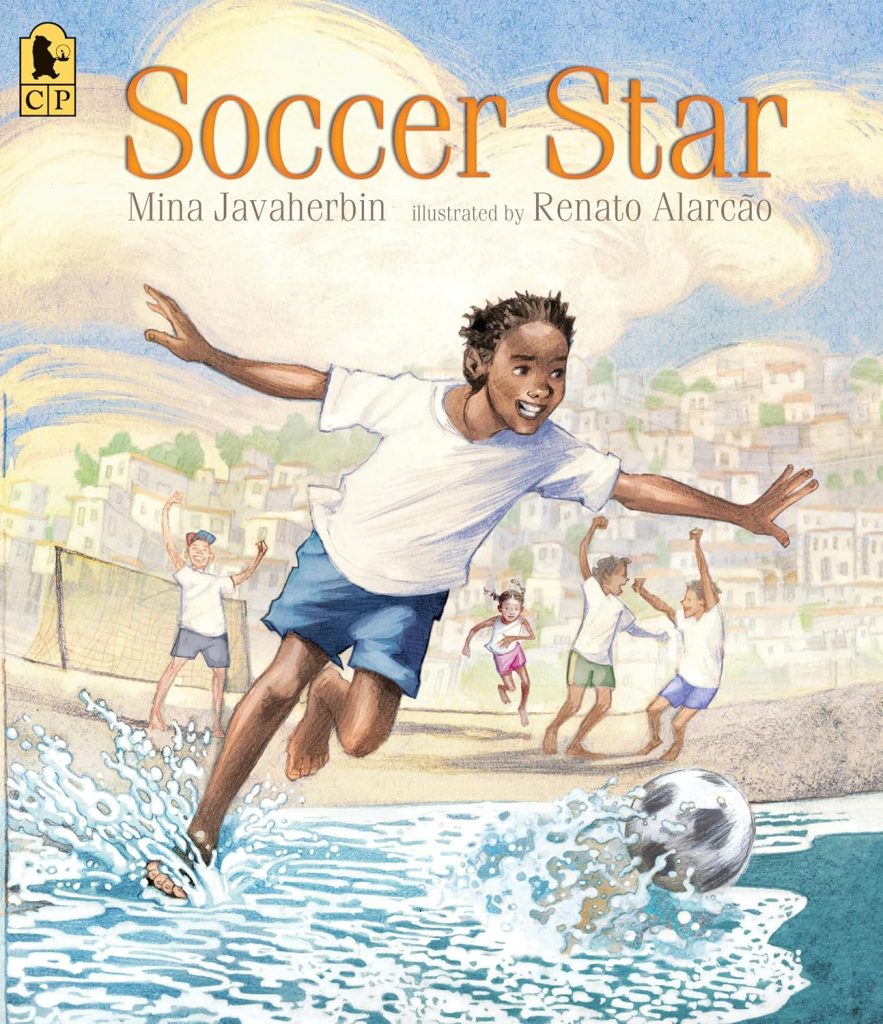
An inspiring story of a Brazilian boy who dreams of being a soccer star — and the sister who steps in to help his team win a game. -Amazon
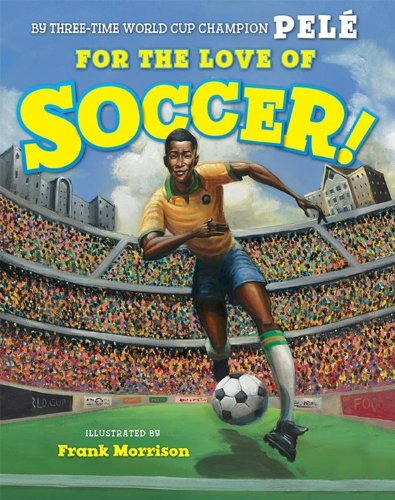
Written by soccer legend Pelé, this heart-warming picture book celebrates what he loved most about the game.
What does the world’s greatest soccer player love about soccer? The same things that you do! Speed, teamwork, dribbling, passing, taking your best shot—and making a G-O-O-A-A-A-L! -Amazon
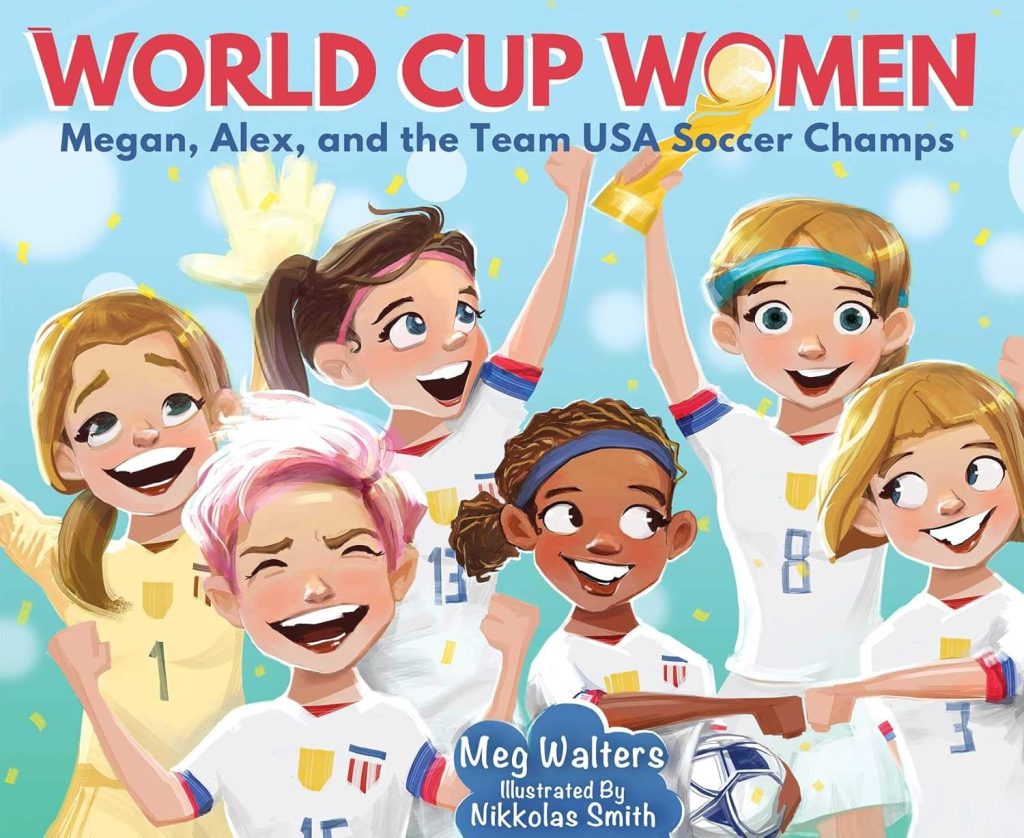
This is the illustrated story of 23 soccer players who worked together to become World Cup champions and heroes to millions of men, women, boys, and girls across America and around the world. -Amazon
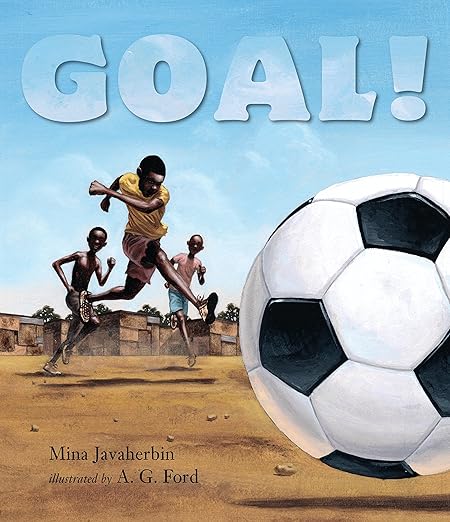
In a dusty township in South Africa, Ajani and his friends have earned a brand-new, federationsize soccer ball. They kick. They dribble. They run. They score. These clever boys are football champions! But when a crew of bullies tries to steal their ball, will Ajani and his friends be able to beat them at their own game? -Amazon
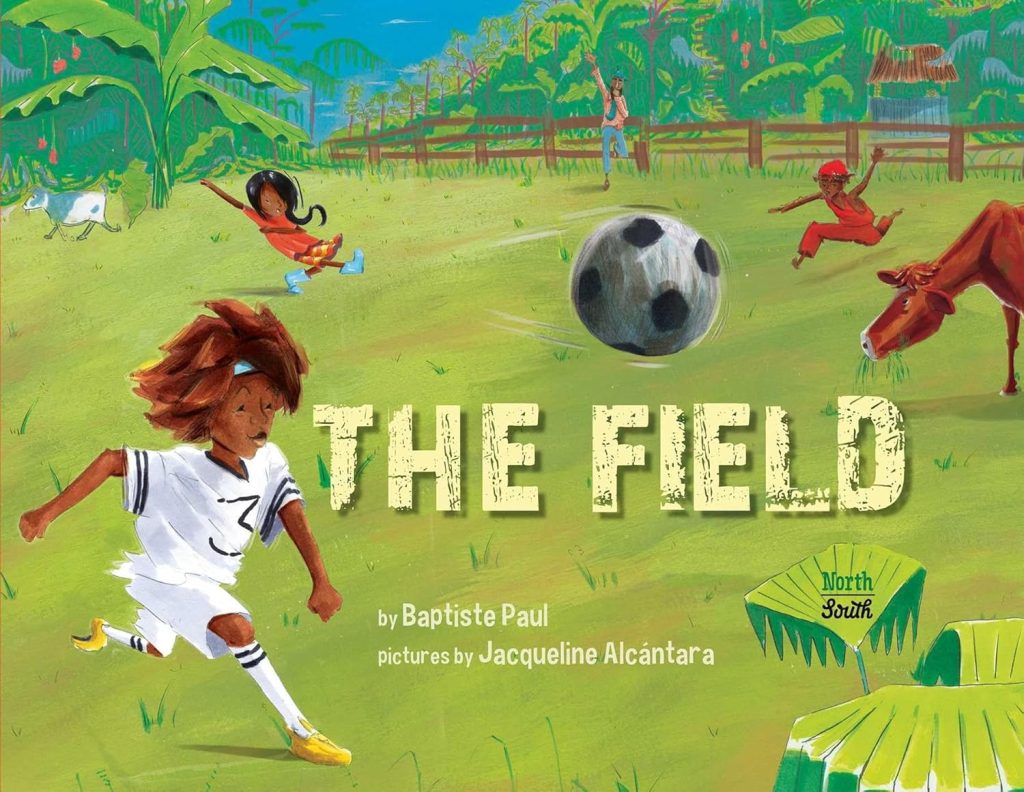
The world’s most popular and inclusive sport has found its spirited and authentic voice in Baptiste Paul’s debut picture book— highlighting the joys of the game along with its universal themes: teamwork, leadership, diversity, and acceptance. Creole words spoke in Saint Lucia, the book’s setting, create a bilingual text that reminds readers of the sport’s world fame. -Amazon
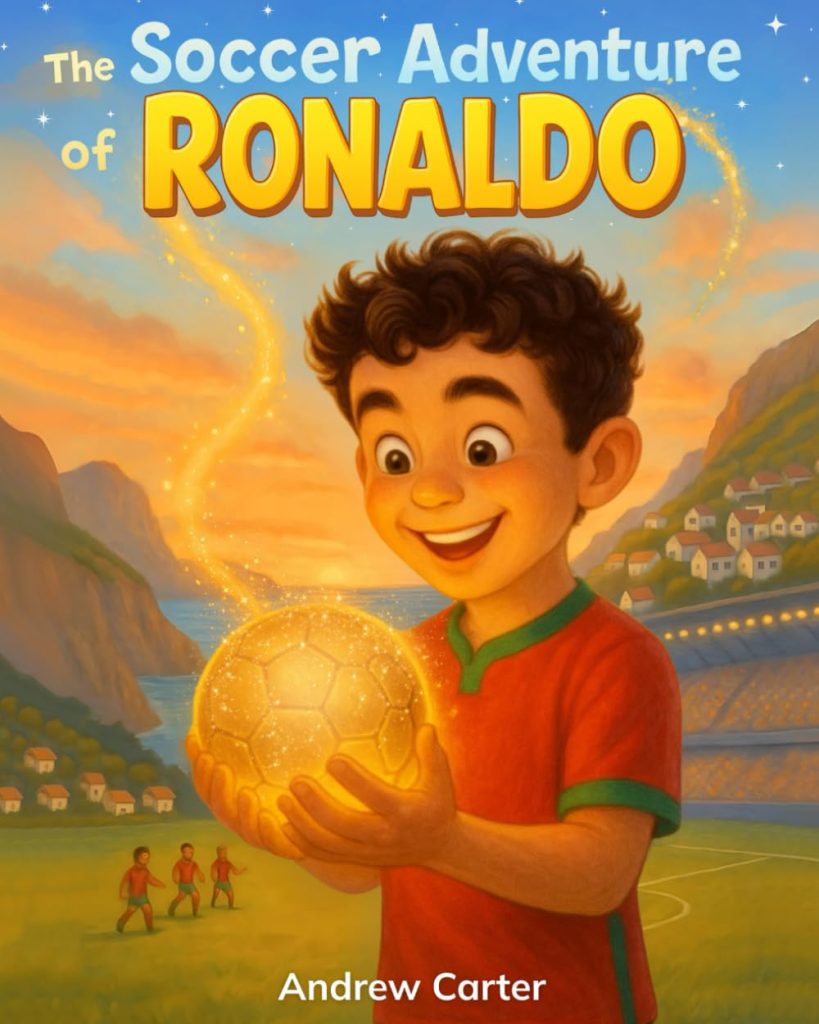
From a young boy on the island of Madeira to one of the most famous soccer players in history, this soccer biography book about Ronaldo brings his story to life in a way children can understand — and be inspired by. -Amazon
Soccer Games
1. World Cup Sharks & Minnows
Best for: Large group, outdoor space
Materials: Soccer balls, cones
How to Play:
- Mark two end lines with cones.
- Choose 1–2 players to be the “sharks.” They stand in the middle without a ball.
- All other players are “minnows” and each has a soccer ball.
- On “Go,” minnows dribble their soccer balls from one end line to the other.
- Sharks try to gently kick the balls away or out of bounds.
- If a minnow loses its ball, they become a shark for the next round.
- Play until only one minnow remains.
Global twist: Name each round after a World Cup country.
2. Soccer Bowling
Best for: Small groups, skill practice
Materials: Soccer ball, cones, or plastic bottles
How to Play:
- Set up 6–10 cones or plastic bottles like bowling pins.
- Place a starting line several feet away.
- Players take turns kicking the soccer ball toward the “pins.”
- Count how many pins are knocked down.
- Reset the pins after each turn.
- Play 3–5 rounds and add up scores.
Variation: Move the kicking line farther back each round.
3. Around the World Dribble Course
Best for: Individual or team relay
Materials: Soccer balls, cones, country labels or flags
How to Play:
- Set up cones in a zigzag or obstacle course.
- Label each section with a country name or flag.
- Players dribble the soccer ball through the course, weaving around cones.
- At each country stop, they pause and complete a quick challenge, such as saying the country’s continent, naming the flag colors, or doing five toe taps.
- Players continue until they reach the finish line.
- For a relay, the next teammate begins when the first player returns.
Tip: Keep the country questions simple for younger kids.
4. Clean Your Yard
Best for: Two teams, high energy
Materials: Several soccer balls, cones, or a center line
How to Play:
- Divide the playing area into two equal sides.
- Split players into two teams, one on each side.
- Place an equal number of soccer balls on both sides.
- On “Go,” players kick balls from their side into the other team’s “yard.”
- Players keep kicking balls away until time is called.
- When the round ends, everyone freezes.
- Count the balls on each side. The team with fewer balls in their yard wins.
Safety note: Balls should be kicked low and controlled.
5. Pass the Passport
Best for: Circle game, teamwork
Materials: One soccer ball
How to Play:
- Players stand in a circle.
- One player starts with the soccer ball and gently passes it to another player using their feet.
- Before passing, the player names a country, continent, or soccer team.
- The next player must name a different one before passing again.
- If a player repeats an answer or gets stuck, they do a quick soccer skill challenge, such as five toe taps, three gentle passes against a wall, or ten jumping jacks.
- Continue until everyone has had several turns.
Variation: Use only World Cup countries, only continents, or only countries from one region.